Be Gentle With Yourself, We’re in a Pandemic!

Right now, in the midst of a global pandemic, it’s important to give yourself a lot of kindness and grace as I am seeing a lot of food issues coming up for people during this time. It’s okay if you are not eating “perfectly” (no such thing) or not engaging in ALL the healthful behaviors. It’s okay if you are doing the best you can and taking care of yourself in ways that feel good for you right now.

In a time of uncertainty, try to focus on the things you CAN control such as your actions, mindset, and effort. Health is so much more complicated than simply what we eat or don’t eat. As a health and wellness coach, I practice from the approach that all foods fit. There are no “good” or “bad” foods and the emotions, stress, and guilt we feel related to food rules cause more damage than the so called “bad” foods do!

It’s important to take into consideration all aspects of health including physical, emotional, mental, spiritual, relational, self-care, stress, work, play, sleep, etc. When trying to make any new behavioral changes, I recommend first assessing where you are currently. Assess your current habits and identify ONE area where you could make a positive change in the next week.

I also like to focus on what can we add in versus what “should” we take away — it’s the abundance mindset! This could be adding a serving of fruits or vegetables to your day, aiming to get more protein or healthy fats, planning a little better to have meals and snacks ready to go before you get “hangry”, moving your body in a way that feels good and gives you energy. There are again lots of areas to assess, and rather than feeling overwhelmed trying to make a lot of changes at once, pick one thing and start there. Small changes really can add up to big results.

Most importantly, bodies change and that is OKAY. Weight is NOT an indicator of health or disease-risk (regardless of what society tells you) and focusing on taking care of yourself and the body you are in now (not the one you used to be in or the one you hope to be in in the future) is the most important thing you can do right now. Being stressed out about weight gain is more dangerous to your health than the weight gain itself. Take a minute to reconnect with your body. Treat your body with respect. Do things that you enjoy and feel good for you. Everyone is different and it’s okay if you are not thriving during a global pandemic. Survival is the name of the game!

If you’re a current Ivy Tech student or employee and wish to schedule a health coaching session, e-mail alutzel@ivytech.edu.

Resiliency in Times of Stress

Though it may not seem like it at times, stress is one of the normal, healthy human responses – both physical and emotional – to life events. In today’s world, an all-too-familiar source of stress is the ongoing COVID-19 pandemic. Some of the reasons for this increased stress are:

  • Uncertainty – This includes worry about what might happen if you or a loved one contracts the virus. There’s particular worry for older adults and those with chronic medical issues who have heightened vulnerability to a life-threatening infection. In addition, there may be uncertainty about financial health due to to a job loss for yourself or loved ones, or loss of savings and investments in the volatile economy. Uncertainty may crop up elsewhere, such as concerns about safely getting groceries or filling a prescription, or visiting your health care provider for health concerns.
  • Information Overload – You are surrounded by information and discussion about COVID-19 most of the day, whether from TV, radio, newspapers, social media, internet sites, friends, neighbors and coworkers.
  • Changes to Your Daily Routines – Frustration with loneliness and isolation can occur if you are primarily confined to your home and unable to do activities you would normally enjoy or see friends and loved ones. Or you may find yourself tired of living in close quarters with family members with whom you don’t normally spend so much time.

In addition to COVID-19-related stress, there’s also the recent social upheaval related to race, or being stressed by the way you or others are treated due to race or ethnicity. Life is full of other sources of stress, as well, such as grieving for the loss of a loved one, downsizing and moving to a smaller house or apartment, an ongoing health problem, or difficulties in relationships. And don’t forget positive sources of stress, which are stressful nonetheless. These include situations such as planning for a wedding or your next big vacation.

Stress is a normal part of life. As a beneficial influence, stress can lead to growth and change. It can be motivation, helping you to be more aware of your surroundings, spurring you to take action or to plan and prepare for the future.

However, stress can affect your body and mind in negative ways, which can become increasingly problematic if it persists over time. You may show signs and symptoms related to your:

  • Emotions – Such as anxiety, fear, grief and sadness.
  • Body Function – These include sleep problems, muscle tension, upset stomach or other GI problems, headache, and fatigue.
  • Thoughts – These include a racing mind, worry, and persistent negative thinking.
  • Behaviors – These include avoidance, social withdrawal, seeking reassurance, drug or alcohol misuse, overeating or undereating, and reduced exercise.

Everyone reacts differently to difficult situations, and it’s normal to feel stress and worry during a crisis. But facing multiple issues can push people beyond their limits. Despite your best efforts, you may find yourself feeling helpless, sad, angry, and hopeless. You might even have trouble concentrating or have changes in appetite. When these signs and symptoms last for several days and interfere with your daily life, reach out for help! Reach out to a friend, a family member, mental health professional, clergy, or organizations such as Mental Health America or National Alliance on Mental Illness (NAMI).

What is Resiliency?

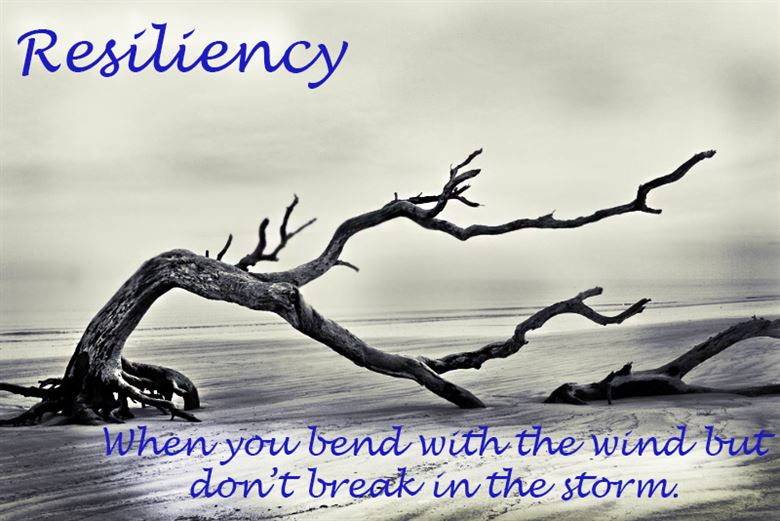
Resiliency is defined as the power or ability to return to the original form or position after being bent, compressed or stretched. When it comes to people, resiliency is the ability to withstand and bounce back from adversity. A lack of resiliency may mean that you dwell on problems, feel victimized or hopeless, withdraw, and perhaps turn to unhealthy coping mechanisms. Low resiliency increases risk of anxiety, depression, stress, etc.

Training yourself in resiliency includes available resources to cope with issues, letting go of what you can’t control, and seeing challenges as opportunities to learn and grow. Maintaining healthy habits and having routines can help keep you centered and be more in control of your life.

Healthy Habits

  • Make Sleep a Priority – Getting 7 – 9 hours of sleep each night. If you struggle with sleep regularly, contact your healthcare provider.
  • Get Out and Get Moving – Exercise produces endorphins which make you feel good. Get out and walk or participate in an exercise class live on the Ivy Tech Wellness and Fitness Center Facebook page or through another fitness center. Be sure to check out our YouTube videos of all the parks and trails in our area for outdoor exercise.
  • Eat a Healthy and Well-Balanced Diet – Eat more fruits and veggies, healthy fats (avocados, walnuts, salmon), whole grains, and lean protein. Watch the Ivy Tech Wellness and Fitness Center’s Facebook and Instagram page for healthy recipes.
  • Wake Up Your Brain – Start each day with a routine. Take a shower or bath, eat a good breakfast, keep up with daily chores, read a devotion. Word finds, crossword puzzles, and coloring mandalas are also healthy for your brain.
  • Stay Connected – Stay in touch with friends and family members. We are designed to have social connections. You can do this through phone, e-mail, text, social media, Zoom, etc. Maybe even plan an outing with a friend where you can dine outdoors. (Keep in mind, though, that being alone and feeling lonely don’t have to be linked. You can always find ways to combat loneliness: Hold people close in your mind and thoughts, be productive by taking up a hobby (sewing, dancing, taking photos), consider adopting a pet from a shelter.)
  • Try to Maintain Positive Thinking – Don’t worry about things beyond your control. Think about a different way to look at a situation and ask yourself if this will matter five years from now.
  • Practice Relaxation – Participate in one of Ivy Tech Wellness and Fitness Center’s Facebook live yoga classes, practice with one of our YouTube meditation videos (https://www.youtube.com/playlist?list=PLf1WKsLjQc7Te3G1xaAfHbogetAZ97cf7 ), practice relaxation breathing and guided imagery, go for a walk, do some stretching exercises, take a hot bubble bath, spend time with your pet, listen to your favorite music, etc.

Helpful Resources

Mental health apps are a great way to strengthen coping skills. Here is a list of free mental health apps:

  • COVID Coach
  • Breathe2Relax
  • Happify
  • Mindfulness Coach
  • SuperBetter
  • Calm
  • Insight Timer

Take control of your health. Love yourself enough to do that. You’re worth it!

Self-Harm

If you’re feeling suicidal or thinking of hurting yourself, seek help. Contact your primary care provider or a mental health professional for resources in your area.

– National Suicide Prevention Lifeline: Call 1-800-273-8255 (confidential and available 24 hours a day) or use it’s webchat at https://suicidepreventionlifeline.org/chat.

– Evansville Local Suicide Prevention Hotline: 812-422-1100

– Mental Health America of Vanderburgh County: 812-426-2640

– Deaconess Cross Pointe: 812-476-8200

– Southwestern Behavioral Health Services: 812-423-7791

-Crisis Text Line: Text HOME to 741741

– Visit the emergency room at your local hospital

– Suicide hotline for LGBT youth, run by the Trevor Project: 1-866-488-7386. You can text it as well.

– The Veteran Crisis Line: 1-800-273-8255or you can text 838255.

Wellness is Essential

If you’ve been putting off living a healthier lifestyle because life or lack of motivation get in the way, then now is the time to refocus. Being in the midst of a pandemic, there is no better time to practice good wellness in your life.

Wellness is a broad area as it covers so many different things, including, physical, emotional, environmental, spiritual, financial, social, creative, occupational, and intellectual. What can you do in each one of these categories to better your life? It’s all about baby steps.

Here are some basic examples from each category:

  1. Physical: Eat at least one fruit and vegetable every day; take a walk around the block daily.
  2. Emotional: Practice positive self-talk or acts of kindness frequently.
  3. Environmental: Recycle plastic bottles you use at home or pick up trash.
  4. Spiritual: Say a prayer or practice meditation daily.
  5. Financial: Cut back on eating out each week or open a savings account.
  6. Social: Contact a friend about getting together to go for a walk in the park or schedule a Zoom meeting with some friends.
  7. Creative: Spend time coloring or playing an instrument.
  8. Occupational: Learn to take work breaks or invite a coworker out to lunch.
  9. Intellectual: Read a book or do a crossword puzzle.

Making a habit of doing at least one thing from each category can have a major impact on your life. Remember, habits will either make or break us. We become what we repeatedly do! The key to develop these new habits is to do them even when you don’t feel like it.

Getting in a full-body workout several days a week while eating a plant-based diet and having a large circle of friends is not how everyone starts out. I will be the first to admit that I’ve had my share of health issues, yo-yo weight, and mental health problems. Many people think that it comes easy to those of us who work in the wellness industry. There’s nothing further from the truth. Every day is a battle (especially during this pandemic), but I’ve also learned to love myself enough to want to practice self-care on a daily basis. It makes me feel good, so, therefore, I want more of it.

I’m not here to judge anyone. Everyone is on their own journey and has to take different steps to get to where they want to go. It’s not going to happen overnight. It’s going to take a lot of patience, perseverance, and self-love to get there. I’m here to guide you and give you the tools you need to succeed, but it’s up to you on when you get there.

I have faith in you and know you can do it. Always reach out if you have questions or need help. Stay safe and healthy everyone!

Amy Lutzel, Certified Health and Wellness Coach

Complications of Mental Illness

With May being Mental Health Awareness Month, I feel this is the perfect time to bring attention to the topic of mental illness. I’m going to be very blunt in this post as I think it’s ridiculous that a stigma for mental illness still exists in our society. I know just how very real mental illness is as it runs in my family. For those who think that people can and do have better control over their actions and feelings, I’m here to say that’s not the case for everyone (at least not all the time). It’s a daily struggle and becoming overwhelmed easily is a big part of the problem.

I lost two people within the past three years who I loved and cared about very dearly. They both struggled with severe mental illness for many years and that’s what ultimately led to their demise.

My friend Paul had bipolar disorder and died from a self-inflicted gunshot wound December 2018. My brother Scott struggled with bipolar and schizophrenia and became suddenly ill in August 2019 from Neuroleptic Malignant Syndrome (NMS) which is believed to be caused by years of using anti-psychotic drugs and/or not taking them appropriately. He suffered for three weeks in ICU before passing away from this condition. Scott had been on psych meds for many years and his meds were always being changed since they would lose their effectiveness. He was also known not to take his medication correctly.

Shortly after Scott passed away, I learned that he was prescribed five different psych meds at one time (Wellbutrin, Effexor, Depakote, Olanzapine, and Trazodone) and most were high doses. I had never heard of Neuroleptic Malignant Syndrome (NMS) until this happened to my brother. It’s a rare condition in that 1 to 2 in 10,000 people on psych meds can develop it. And, for those who develop it, as many as 20% can die from it. After seeing all my brother’s prescriptions after he died, I thought to myself, “Well, no wonder he developed NMS.” My brother also had underlying health conditions which exacerbated the issue.

Scott and Paul were both very bright, talented, and fun-loving people, but they struggled with low self-esteem, completing tasks, and a lack of consistent motivation and self-care. They had very few friends due to their illnesses. They were also good at hiding their pain much of the time. However, when they did reach out for help and were advised on things to do naturally to take care of themselves, physically and mentally, they weren’t always able. Naturally, the lack of self-care can lead to physical health issues and social problems such as diabetes, heart problems, substance abuse, homelessness, incarceration, etc. It’s a vicious cycle and a difficult life to endure.

No one wants to suffer from mental illness, but for Scott and Paul there was shame and embarrassment that came with it. This wasn’t as bad for my brother in the last few years as he grew to accept it more, but growing up it was always kept a secret.

I only wish that both of them never had to experience the stigma of mental illness and were able to receive early and aggressive cognitive behavioral therapy rather than mostly relying on medications throughout their lives. Neither one of them were very open to group therapy for various reasons which also made it difficult in managing their illnesses.

While improvements have been made, continued work needs to be done. I only hope that we as a society can become more understanding and empathetic towards people who struggle with mental illness. Not only should we be kind to everyone we meet (while having healthy boundaries), but we need to educate everyone more on this topic. Also, as parents, we need to be better educated on coping skills so that we can help our kids be more resilient instead of enabling them. And, as role models, we all need to practice regular self-care.

If anyone you know is struggling right now with any type of mental health condition, encourage them to reach out for help and try multiple coping mechanisms. Exercise, a healthy diet, managing stress, and taking medications appropriately can go a long way in improving mental health. I would be much worse off mentally if I didn’t do these things to take care of myself. The majority of people can manage their mental illness if they get the right help, get it early on, and do it consistently. They shouldn’t just rely on one or two things to help them. Sometimes, it might take numerous self-help and professional tools to get the help they need. And, that’s ok.

For more information on Neuroleptic Malignant Syndrome – https://www.cancertherapyadvisor.com/home/decision-support-in-medicine/hospital-medicine/neuroleptic-malignant-syndrome/

Amy Lutzel, Ivy Tech Wellness Manager, is not only a Certified QPR Gatekeeper Instructor, but also trained in ASIST (Applied Suicide Intervention Skills Training), Adult and Youth Mental Health First Aid, and is currently working on her master’s degree at the University of Missouri’s School of Education and Counseling Psychology.

Lose the Dieting Mentality, Just Be Healthy

If you’re someone who has struggled with yo-yo dieting and/or emotional eating, then keep on reading.

There is so much information out there on different diets that a person can get OVERWHELMED. I just want to keep it simple and give it to you straight.

First, I’m here to tell you, please stop with the dieting mentality. Instead, you should focus more on just being healthy—having a healthy mindset, getting the proper nutrition, exercise, and practicing self-care—which includes loving yourself from the inside out. Yes, that’s right! Love your body and everything about it no matter what and everything else will fall into place. That’s the best part about this whole method as you will be treating yourself well and doing things to take care of YOU first. After all, you can’t pour from an empty cup.

Diets involve restrictions. And, while some people may have success with that it’s not ideal for everyone. Restrictive diets can cause more harm than good for many people. If you restrict something from your diet, in time, it can become increasingly difficult to avoid something particularly during a stressful time of your life. This is where good coping tools come into play. (See previous blog post on stress.)

There are many of us out there who tend to want to eat more, or perhaps we crave unhealthy food when we’re stressed or upset about something (particularly if we’ve been restricting unhealthy food from our diet). Sometimes, it’s just easier to grab junk food. I get that. But, similar to limiting our time with toxic people because it’s unhealthy for us, we should also limit our unhealthy food intake. Everything in moderation.

One thing to keep in mind is that when you do indulge and eat something unhealthy is that you DO NOT feel guilty about it. You do it and move on. Feeling guilty will only intensify things and make you want to keep eating poorly. You’ll start falling into that all or nothing or “I might as well give up” mentality. Nope! You can’t allow that to happen. Just pick up and make your next meal or snack a healthy one.

If you struggle with not knowing what foods are the healthiest and provide you with the most nutrition, then follow @ivytechwellandfit on Facebook and Instagram to get ideas. Or, if you’re an Ivy Tech Evansville student or employee, you can make a health coaching appointment with me to guide you through the process of living a healthier lifestyle and have someone to hold you accountable (which many of us need sometimes.)

If your struggles go way deeper than that and you deal with a lot of pent of anger or depression, then perhaps you should consider seeing a counselor or therapist to help you process everything and get to the root of your problem. Once you do this, then you can learn good coping tools to help you. Until you discover the underlying cause of why you’re not having success in certain aspects of your life, then you’re constantly setting yourself up for failure. Awareness and acceptance are keys to moving forward and having long-term success.

Some of this information may seem overwhelming especially if you’re not ready to make a change in your life. You will know when the time is right and when you’re ready to take better care of YOU. No one can do it for you. It all has to come from within. YOU hold the key!

Doesn’t being happy and healthy in body, mind, and spirit sound wonderful? Wouldn’t it be great to lose the scale and not obsess about your weight every day? Well, it is possible for you, believe it or not. Feel free to comment or ask me any questions on this blog if you’re stuck and needing help on where to go next. I am very passionate about what I do, and as a Health and Wellness Coach, I can say that feeling empowered and making decisions for yourself is a step in the right direction. I have faith in you!

You may also contact me with questions via e-mail at alutzel@ivytech.edu. For more information about the programs we offer at the Ivy Tech Wellness Center, visit our web page at https://www.ivytech.edu/evansville/6630.html.

Stress: The Silent Killer

If you find that you have frequent headaches, fatigue, problems with sleeping or memory, stomach and digestive issues, or other general aches and pains, you might become more aware of what brings on these symptoms. One of the number one causes can be stress.

Don’t be embarrassed if that’s the case with you. It’s very common for stress to sneak up on you without even realizing it. A number of things can cause stress and they’re not always obvious. Perhaps, you get overwhelmed by things easily or maybe you have trouble with boundaries and learning to say no to others. You may be carrying around guilt, shame, denial, or anger that may be the underlying cause. It’s important to get to the bottom of what could be causing your stress and learn coping tools, otherwise, you can develop serious health problems (including heart disease, stroke, obesity, diabetes) which can get out of control before you realize it.

There is positive stress (eustress) and negative stress (distress). Examples of positive stress might be starting a new job, getting married, buying a house, or having a child. Examples of negative stress would be going through a divorce, a death in the family, abuse or neglect, or financial troubles. We all have some type of stress in our lives and that’s not necessarily a bad thing. It’s the bad or negative stress that tends to hang on and cause all the underlying issues which is why we need healthy coping mechanisms.

If you feel as if you’re sick a lot or just not feeling well in general, you might stop and take a closer look at your life and how you’re handling things. You will be doing yourself a favor in the long run. If you’re having trouble identifying with what’s going on inside of you, then don’t hesitate to reach out for professional help. There’s nothing to be ashamed of. Sometimes, we have to reach out and ask for help.

Reaching for junk food, alcohol, cigarettes or just wanting to be alone seem like the simplest and most comforting things to do when you’re feeling stressed, but in reality, those things only exacerbate the issue. When you’re feeling the most stress is when you need to practice self-care the most. This includes exercising, eating a healthy meal, getting a massage, meditating, practicing yoga or stretching, having a sense of humor, getting together with a friend or family member, working on a hobby you enjoy, etc. It’s important to get into that habit. Don’t deny what you’re feeling, but instead take good care of yourself and get the help you need.

Ivy Tech’s Wellness and Fitness Center provides a number of tools to help you, including the number of opportunities for exercise, yoga, Paws ‘N Relax Pet Therapy, our kindness initiatives, and our Relaxation Lounge. This room has a variety of helpful coping tools including emWavePro Biofeedback for anxiety, mandala coloring books, a finger labyrinth, Zen garden, relaxation music and DVDs, along with a number of self-help and devotional books.

I am a Certified Health and Wellness Coach and can assist Ivy Tech students, faculty or staff with getting started in a healthier lifestyle and working towards improving negative stress. I am not a therapist, but I have personal experience on what stress does to your body, physically and mentally. I want you to know there is hope and you can feel better.

Remember, it’s time to put yourself first. You deserve it! 🙂

Meal Prepping

I understand the struggles of finding the time and motivation to eat healthier. Unhealthy food, processed food, fast food restaurants are quicker and more convenient. BUT . . . we truly and honestly will feel so much better physically and mentally when we avoid that stuff or at least cut it back.

Even with the busiest schedules, we can make eating healthy work if we make it a priority. It might involve changing our schedules around a bit or cutting back on another activity AND learning to say no to others more. Following these suggestions can help free up your time along with doing some meal prepping.

Now, don’t get me wrong, I don’t get to do this every week, but I try to do it as much as I can and I’m always grateful when I do. Plus, it saves me money in the long run by not eating out as much.

I do my meal prepping on the weekend as that is when I usually have more time. This is what my meal prepping usually involves:

1. Vegetables: Cleaning and cutting up a variety of vegetables. I do this so that they are ready to go for salads, smoothies and other side dishes. I like to do this with peppers, onions, cucumbers, mushrooms, Zucchini, squash, etc. I always have spinach on hand for salads and smoothies. (See photo below.)

2. Canned food: I usually buy canned artichokes, black olives, chick peas, and bags of cut carrots so these don’t require any work. (Tip: If you prefer to buy canned fruits and veggies, try to get canned fruit in 100% juice and canned vegetables with no added salt. These are healthier options.)

3. Fruit: In the winter, I buy frozen bags of blueberries, raspberries, blackberries, strawberries, and peaches, and I buy cuties, apples, and bananas a lot. I usually freeze a couple of bananas when I buy them so they can be ready to go in my smoothies. Not much prepping involved there. I use my apple slicer to save some time on cutting up my apples to put in yogurt or oatmeal. (I love that thing!) I do like to buy mango and kiwi sometimes, too, for something different and I save these for the weekend. I also like to freeze slices of mango to make some homemade Froyo that my daughter loves. 😃

4. Eggs: I boil eggs on the weekend and have hard-boiled eggs ready to go for salads and snacks. I use my egg slicer a lot as it saves me time.

5. Protein: I grill boneless, skinless chicken breast and salmon on my George Foreman Grill and wrap these in Saran Wrap to have them ready to go for salads or to heat in the microwave as a main course. I just use some olive oil, garlic powder and pepper for seasoning and they’re ready to go.

6. Breakfast: I’m a huge fan of oats (as you can tell from my recipe posts). I love them for their health benefits, cost, and the fact they fill me up longer. I make overnight oats during the week because you prep them in a jar the night before and the next morning you can just add some yogurt, fruit, nuts and/or nut butter to them and they are quick, nutritious, and delicious. (When you can, try to use all natural peanut butter, almond butter, cashew butter, or Sunbutter for healthier options.)

7. I also eat toast for breakfast during the week. You can really jazz up a piece of toast to make it healthy and filling. Watch my posts for recipes. I usually buy whole grain white or wheat bread.

8. Snacks: Other snack options are popcorn and nuts which are ready to go with no prepping needed. They have fiber and protein and will fill you up longer. I also make my own trail mix for a snack option. I usually use yellow raisins, raw almonds, walnuts, sunflower seeds and some dark chocolate chips. I’ll make enough to last me for a couple of weeks.

9. I like to buy avocados 🥑 and pomegranates on occasion. These are a little more costly but so nutritious and yummy. I use avocado in salads, smoothies and I like to make chicken and tuna avocado salad and eat it on a bed of spinach or on a pita. I use pomegranate arils on toast and overnight oats a lot.

10. Freezing Food: I do utilize my freezer a lot, too. This will help things keep longer and I can prep even further in advance this way. I like to use my freezer for any soups I might make over the weekend. I don’t do this often but when I do, I make a lot so it will last throughout the week.

I hope this helps give you some ideas. You may come up with other ideas that work better for you.